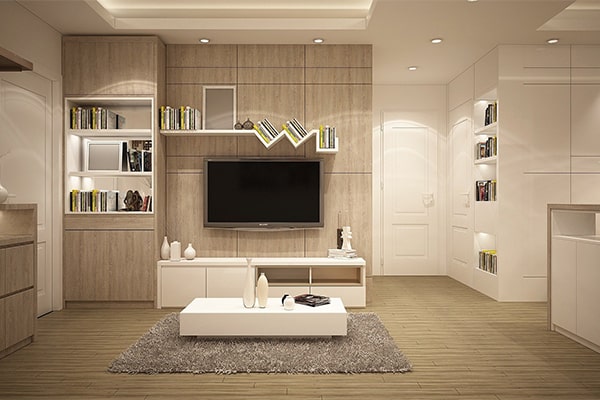

Walk into a room that feels immediately right and you will struggle to say why. Nothing shouts. Nothing demands attention. And yet the space holds you — the light is soft, the colours are still, the textures invite a hand to rest on the arm of a chair. This is the quiet power of layered neutrals, and it is the hardest thing in interior design to get right.
Neutrals have a reputation problem. To the untrained eye they read as safe, beige, or worse — boring. But the truth is that a truly neutral interior is anything but neutral in feeling. It is a complex composition of undertones, surfaces and finishes that work together to create a sense of calm, depth and warmth. The best ones feel like a room that has existed for decades, not one that was assembled from a mood board.
What makes a neutral scheme work
The secret is not in the colour you choose — it is in the contrast you don't. A successful neutral room relies on three elements that must be balanced with precision:
- Temperature contrast — warm and cool tones placed next to each other so the eye reads variety without noticing the shift. A cool limestone floor against a warm limewash wall, for instance.
- Texture density — smooth, rough, matte, gloss, soft, hard. The more textural range, the more the room wraps around you. Loss is the enemy of a neutral interior.
- Value spacing — the distance between the lightest light and the darkest dark. A narrow band (all mid-tones) feels safe and flat. A wide band (ivory, charcoal, and everything between) feels rich and resolved.
When these three are working together, a room can be made entirely of oatmeal, putty and stone and still feel layered, interesting and profoundly comfortable.
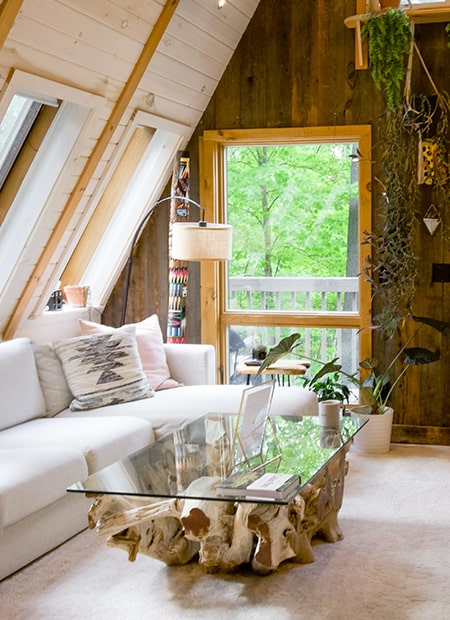
Building the palette
We start every residential project with a base of three neutral tones. The first is a wall colour — often a warm white or pale limestone, never pure white. The second is a main furnishing tone, usually a mid-weight neutral like oatmeal, flax or a soft mushroom. The third is an accent dark — charcoal, bronze or deep walnut — used sparingly on joinery, window frames or a single statement piece.
From there we layer. A linen sofa in sand. A wool rug in ivory with a barely-there pattern. Curtains in a slub-cotton that catches the afternoon light. A side table in patinated brass. Nothing matches, but everything belongs. The palette is a conversation, not a uniform.
Neutral does not mean boring. It means the room lets the people inside it be the most interesting thing in it.
Light as a material
Neutral rooms are particularly sensitive to light because they have so little colour to absorb it. The same wall can look warm in the morning, cool at noon and moody at dusk. We account for this in every project by specifying materials that respond to changing light — limewash that shifts with the angle of the sun, linen that glows from within, stone that reveals its veining only in direct light.
The lighting plan itself becomes a design tool. In a neutral room, the lightest layer is the architecture itself — the walls, the ceiling, the floor — and the furniture sits inside it. We use grazers to wash walls, pendants to define zones and small lamps to create pools of intimacy. The effect is a room that changes through the day, always offering something new to notice.
Practical notes for your own home
If you are building a neutral scheme at home, here are three things you can do today:
- Test your paint on all four walls and live with it for a weekend. The same colour looks different on north, south, east and west faces.
- Introduce a matte surface, a gloss surface and a soft surface in every zone. A shiny ceramic vase next to a matte plaster wall and a velvet cushion is a complete sentence.
- Add a single dark element — a charcoal picture frame, a wrought-iron table leg, a bronze lamp — to give the eye somewhere to rest.
The quiet power of layered neutrals is not a trend. It is a discipline — one that rewards patience, observation and a willingness to let the room speak for itself. And when it works, it works so quietly that nobody notices why. They only know that they want to stay.